Source: chrisinplymouth via Flickr
Who would have thought that massaging the hands and feet in a certain way could have healing effects throughout the body?
It seems the ancient Egyptians did, as did ancient Native American and Chinese cultures – and it is a practice that Dr William Fitzgerald brought to America in 1909, and one which his protégé Eunice Ingham perfected in 1938.
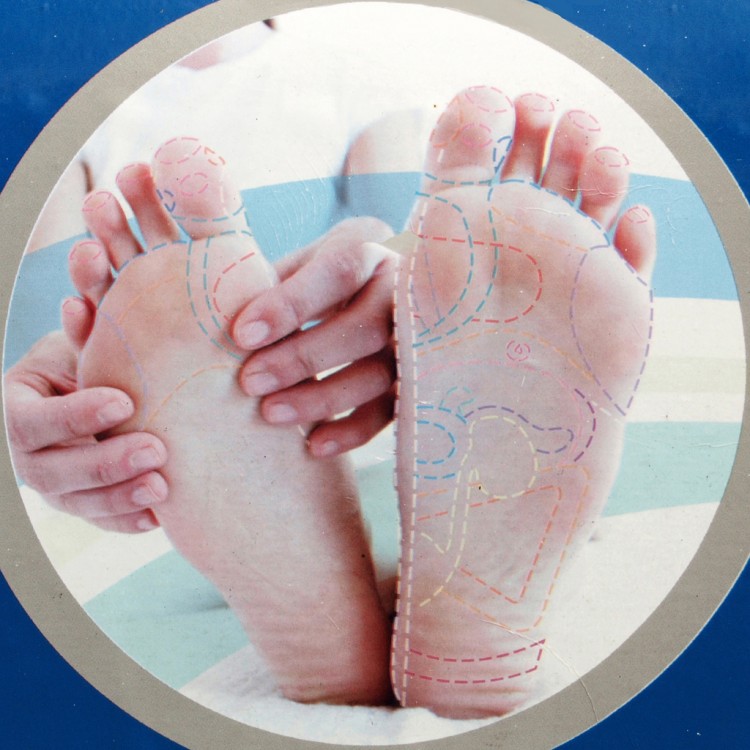
The practice of reflexology maps out areas in the hands, feet and sometimes ears, which are believed to mirror/reflect other parts of the body and internal organs. These zones are what Ingham called reflex areas.
Reflexologists believe that massaging and applying pressure to these reflex areas, without aid of tools, oils or creams, will reflect changes back in the body.
Most benefits claimed by reflexology focus on boosting the circulatory, nervous and lymphatic systems. Such benefits include alleviation and prevention of the following:
– PMT, menstrual irregularities and menopause
– Migraines
– Sinus blockages
– Colic
– Constipation and Diarrhoea
– Sciatica, neck and back pain
– Asthma
– Stroke
There is also a focus on the relaxing effects of reflexology, which in turn are said to lower stress and tension in other areas of the body. The unifying theory is that negative or blocked energy can hinder and sometimes prevent healing – reflexology tries to unblock and clear energy or Qi.
Sessions tend to last about an hour, however depending on the age of the patient, and the intended effects of the treatment, session length may vary. It is also recommended that patients follow up with a minimum of two to three sessions in order to see changes – the more chronic the condition, the more sessions recommended for you to attend.
Reflexology is a form of alternative or complementary medicine, which means its foundation is not necessarily supported or grounded by science, rather by tradition and cultural practice. It is also often used to complement more traditional forms of medical practice such as aiding recovery after surgery.
This article first appeared on minx magazine
 Chani Unger